


Objective Train of Four Monitor
Train of Four – Double Burst – Tetanus – Post Tetanic Count – Twitch – Nerve Mapping & Locating

Train of Four – Double Burst – Tetanus – Post Tetanic Count – Twitch – Nerve Mapping & Locating


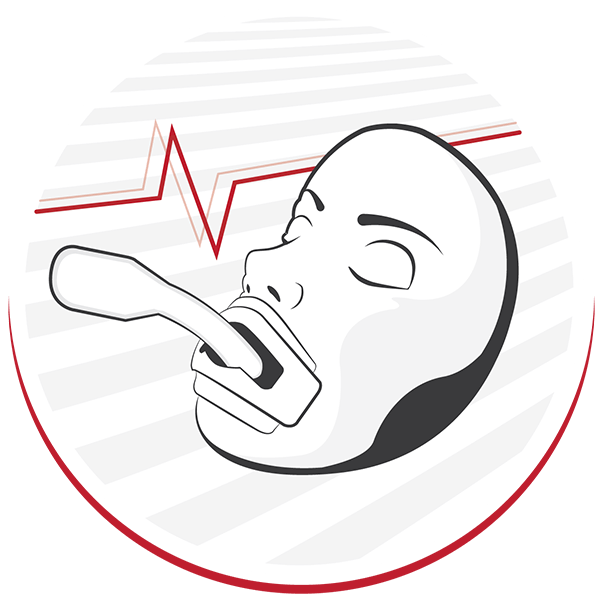
Safety in the recovery room depends on accurate, objective data. [simple_tooltip content=’
Murphy GS, Szokol JW, Avram MJ, Greenberg SB, Marymont JH, Vender JS, Gray J, Landry E, Gupta DK.. Intraoperative acceleromyography monitoring reduces symptoms of muscle weakness and improves quality of recovery in the early postoperative period. Anesthesiology. 2011;115:946–54. PubMed
Baillard C, Clec’h C, Catineau J, Salhi F, Gehan G, Cupa M, et al. Postoperative residual neuromuscular block: a survey of management. Br J Anaesth. 2005;95:622–6. PubMed
‘]Studies[/simple_tooltip] show that objective monitoring of paralytics during and after surgery can give an accurate indication of when it is safe to extubate the patient. The Stimpod™ NMS450X TOF monitor provides a simple, rapid setup for monitoring in any O.R.

Safety in the recovery room depends on accurate, objective data. [simple_tooltip content=’
Murphy GS, Szokol JW, Avram MJ, Greenberg SB, Marymont JH, Vender JS, Gray J, Landry E, Gupta DK.. Intraoperative acceleromyography monitoring reduces symptoms of muscle weakness and improves quality of recovery in the early postoperative period. Anesthesiology. 2011;115:946–54. PubMed
Baillard C, Clec’h C, Catineau J, Salhi F, Gehan G, Cupa M, et al. Postoperative residual neuromuscular block: a survey of management. Br J Anaesth. 2005;95:622–6. PubMed
‘]Studies[/simple_tooltip] show that objective monitoring of paralytics during and after surgery can give an accurate indication of when it is safe to extubate the patient. The Stimpod™ NMS450X TOF monitor provides a simple, rapid setup for monitoring in any O.R.
 ‘ bubblewidth=’250’]See how[/simple_tooltip]
[simple_tooltip content=’Butterly A., Bittner E.A., George E., Sandberg W.S., Eikermann M., Schmidt U. Postoperative residual curarization from intermediate-acting neuromuscular blocking agents delays recovery room discharge. Br. J. Anaesth. 2010;105:304–309. doi: 10.1093/bja/aeq157. PubMed
Xará D, Santos A, Abelha F. Adverse respiratory events in a post-anesthesia care unit. Arch Bronconeumol. 2015;51:69–75. doi: 10.1016/j.arbres.2014.04.016. PubMed‘]Studies[/simple_tooltip] have shown that using objective NMT monitoring in the surgery and recovery rooms increases patient throughput and unnecessary and expensive PACU intervention. Staff can efficiently manage patient needs, from pre-surgery to recovery to the PACU.
The Stimpod™ NMS450X TOF monitor is the most affordable available, with the lowest and most predictable cost of care of all stand-alone TOF monitors.
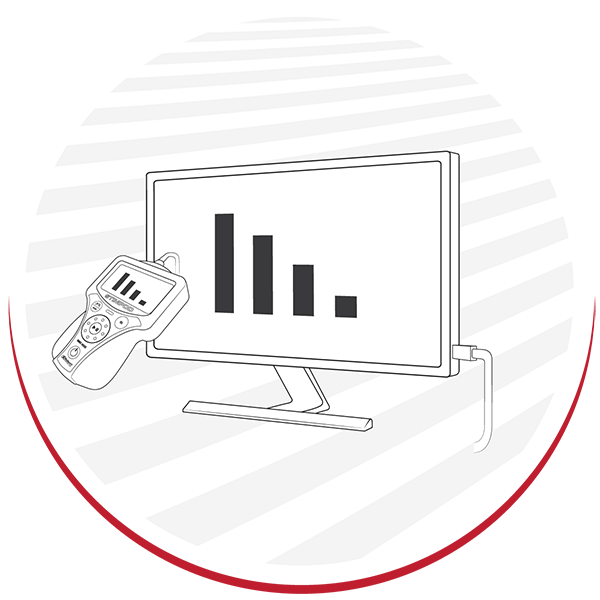
The Stimpod™ NMS450X TOF Monitor documents the entire procedure and lets you upload the data to keep your Electronic Medical Records up to date with the required information.


|
|
The Stimpod NMS450X+, equipped with two different modalities (AMG and EMG), empowers anaesthesiologists to achieve safer intraoperative control of patients’ neuromuscular blockade. The full case NMT Monitoring enables safe extubation and eliminate residual paralysis in any hospital setting, provider preference and surgery type. This advanced technology empowers clinicians to have a safer and more precise control over the neuromuscular blockade during surgery, aligning with the latest guideline-concordant recommendations for the monitoring of patients for residual paralysis following the administration of a neuromuscular reversal agent. The ASA and ESAIC strongly recommend the use of a quantitative neuromuscular blocking agent monitor in conjunction with neuromuscular blocking agents.
While reversal drugs like Sugammadex are commonly used for NMBA reversal, they are not a foolproof solution and residual paralysis remains a significant concern based on clinical evidence. By incorporating the Stimpod NMS450X+ into their practice, anaesthesiologists can proactively monitor the depth of neuromuscular blockade, significantly reducing the incidence of residual paralysis in patients. This contributes to improved patient outcomes and a safer post-operative recovery.
The Stimpod NMS450X+ offers a cost-effective solution in the OR, PACU and ICU. With its two modalities, AMG and EMG, the device provides flexibility in monitoring options. The only neuromuscular monitoring system available with both AMG and EMG enabling cost control at the point-of-care based on need and specific setting, allowing affordable standardisation across the entire hospital. Cost of Care model, enabling monitoring of all drug usage to ensure optimal use, thus saving on both paralytic and recovery agents. This cost-saving feature ensures efficient resource management without compromising patient safety.
AMG offers the most cost-effective option to implement with a reusable sensor and versatile patient setup options enabling neuromuscular transmission monitoring of the hand, toe or face.
EMG is ideally suited for neuromuscular monitoring of surgeries where tucked hands and arms are required, with optimised performance through a patented, skin-like electrode.
Residual neuromuscular blockade after anaesthesia has been linked to severe complications and adverse outcomes, including increased oxygen desaturation, postoperative pneumonia, airway obstruction, and reintubation. By utilizing the Stimpod NMS450X+ and effectively preventing residual NMB, clinicians can contribute to reduced LOS in hospitals and improve patient recovery rates.
Anaesthesiologists worldwide who have adopted the Stimpod NMS450X+ demonstrate their commitment to following the latest guidelines and best practices in anaesthesia. By incorporating a quantitative NMBA monitor into their practice, clinicians align themselves with the recommendations set forth by the ASA and ESAIC, promoting a higher standard of care and patient safety. By utilizing the Stimpod NMS450X+, anaesthesiologists are a testament to its effectiveness to improve patients outcomes and can contribute to the reduction of adverse events and enhance the recovery process for their patients.


