The Cost of Postoperative Respiratory Adverse Events
Respiratory impairment following general anaesthesia can pose a significant problem. Adverse and critical respiratory events (AREs and CREs) have been responsible for increased morbidity and mortality. The main cause of AREs after surgery is related to the use of neuromuscular blockers (NMBAs) during general anaesthesia. The action of NMBAs might not cease completely at the end of the procedure, leading to residual muscle paralysis. Postoperative residual neuromuscular blockade, aka postoperative residual curarization (PORC), ranks among the top three critical events in the post-anesthesia care unit (PACU) that require emergency intervention.1 It has been estimated that approximately 40% of the patients brought to the PACU have residual blockages.2 Apart from the obvious effects on patients’ life and health, AREs can have other consequences. Caregivers have to undergo increased physical and emotional stress, which can affect delivery of care to other patients in the PACU. Financial costs can increase for both patients and hospitals as substantial critical care resources are devoted to solving such problems.
How big is the problem of residual neuromuscular blockade?
Muscle paralysis is estimated using a clinical tool called train-of-four ratio (TOFR). Residual neuromuscular blockade is believed to have significant clinical effects if the TOFR goes below 0.9.3 With just a single dose of intermediate acting NMBAs, it has been shown that up to 45% of patients can have residual blockade (TOFR < 0.9).4 Lower TOFRs have been associated with increased risk of CREs. This was demonstrated by Murphy et al, who collected data of over 7400 patients who had received general anaesthesia.5 They found that the incidence of critical respiratory events in this group of patients due to residual blockade was 0.8%. Based on these statistics, Brull et al estimated that each year about 81,000 people in the United States and almost 0.5 million people worldwide experience CREs after general anaesthesia.2
What is the main cause of CRE after surgery?
It was shown that the incidence of CREs was higher by 50% in patients who had TOFR less than 0.76
While there can be several causes of CRE, a large proportion of cases have been associated with residual neuromuscular blockade. In one study by Bissenger et al, it was shown that the incidence of CREs was higher by 50% in patients who had TOFR less than 0.7.6 In a separate case-control study, Murphy et al compared TOFRs in patients who had developed CREs and controls who did not have CREs. They showed that while patients in the control group had TOFRs above 0.7, 78.3% of patients who had CREs had TOFRs that were below 0.7.3 Xara et al also investigated the determinants of AREs in 340 patients who underwent surgery. They found that patients who were administered NMBAs during the surgical procedure had increased incidence of AREs (79%) as compared to those who did not receive them (55%).7 They also noted that the incidence of ARE was increased in patients who had received neostigmine. Grosse-Sundrup et al showed that the use of intermediate NMBAs increased the risk of postoperative desaturation and re-intubation.8
What are the costs involved?
Residual neuromuscular blockade can cause upper airway obstruction, aspiration and pharyngeal dysfunction. These situations may require emergency intervention in the form of re-intubation and positive pressure ventilation. The costs associated with these interventions can be considerable. Patients who develop respiratory complications after surgery generally often have to be hospitalised for longer, which increases costs.
The cost of treatment for patients with respiratory complications was $62,000, compared to $5000 without complications, with an additional 92,000 more ICU admissions per year10
A report developed by the National Surgical Quality improvement program showed that patients with respiratory complications stayed at the hospital for at least 14 days longer vs. those who did not have these complications.10 The same report estimated the cost of treatment for patients with respiratory complications was around $62,000, while those without such complications were set back by a mere $5,000 in comparison. On a national level, pulmonary complications after surgery lead to 92,000 more ICU admissions per year, which alone imposes a burden of $3.42 billion annually.
What is the best way to deal with the situation?
Residual neuromuscular blockade can be avoided by monitoring neuromuscular status during the surgical procedure. If neuromuscular function is allowed to return to optimal levels prior to extubating the patient, chances of residual blockade in the PACU decrease. Ideally, the anaesthetist should be able to monitor the TOFR, so that it may be allowed to reach the critical threshold of 0.9 prior to extubation.
What kind of monitoring works best?
Severe hypoxaemia occurred in 21.1% of patients in the conventional group but in none of the patients in the acceleromyography group11
There are three methods to monitor neuromuscular function—clinical, qualitative monitoring and quantitative monitoring. Clinical methods (such as head-lift and grip-strength tests) have low sensitivity and specificity, and are not really suited for patients prior to extubation. Qualitative evaluation using peripheral nerve stimulators is a common practice. However, it involves subjective assessment of TOFR and studies have shown that TOFRs above 0.4 may not be effectively detected by this method. Quantitative (or objective) methods of calculating TOFR, using techniques such as mechanomyography, electromyography and acceleromyography, have proven more effective. Murphy et al assessed the risk of residual neuromuscular blockade and AREs in patients who were monitored by both qualitative and quantitative means.11 Patients were randomised for NMB monitoring using either conventional peripheral nerve stimulators or acceleromyography. Residual NMBs in the PACU were documented in 30% of patients in the conventional group and only 4.5% of patients in the acceleromyography group. More significantly, severe hypoxaemia occurred in 21.1% of patients in the conventional group but in none of the patients in the acceleromyography group.
The bottom line is this: quantitative neuromuscular transmission monitoring has the potential to reduce residual blockades, decrease CRE risk, and reduce costs.

The Stimpod NMS450X Neuromuscular Transmission Monitor
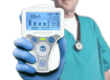
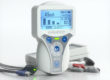
The Stimpod NMS450X is a standalone neuromuscular transmission monitor that can easily be integrated into the anaesthetic setup. During reversal of neuromuscular blockade, the monitor automatically initiates TOFR monitoring, which continues until recovery is complete. Its portable design makes it easy to shift between the OR and PACU, and it can easily be attached to the IV pole. Its economical pricing and proven efficacy make it a sensible investment for hospitals who wish to make optimum use of resources and cut costs in the long term. For more details, visit xavant.com or request a quotation.
References
- Strauss P, Lewis M. Identifying and Treating Postanesthesia Emergencies. Or Nurse. 2015 Nov 1;9(6):24-30.
- Brull, S. J., & Kopman, A. F. Current Status of Neuromuscular Reversal and Monitoring: Challenges and Opportunities. Anesthesiology 2017; 126(1): 173-90.
- Murphy GS, Szokol JW, Avram MJ, et al. Postoperative Residual Neuromuscular Blockade is Associated with Impaired Clinical Recovery. Anesth Analg. 2013;117(1):133–141
- Debaene B, Plaud B, Dilly MP, Donati F. Residual Paralysis in the PACU After a Single Intubating Dose of Nondepolarizing Muscle Relaxant with an Intermediate Duration of Action. Anesthesiology 2003;98: 1042–8
- Murphy GS, Szokol JW, Marymont JH, Greenberg SB, Avram MJ, Vender JS: Residual Neuromuscular Blockade and Critical Respiratory Events in the Postanesthesia Care Unit. Anesth Analg 2008; 107:130–7
- Bissinger U, Schimek F, Lenz G. Postoperative Residual Paralysis and Respiratory Status: A Comparative Study of Pancuronium and Vecuronium. Physiol Res/Acad Sci Bohemoslovaca. 2000; 49(4):455–462
- Xará D, Santos A, Abelha F. Adverse Respiratory Events in a Post-anesthesia Care Unit. Archivos de Bronconeumología (English Edition). 2015 Feb 1;51(2):69-75.
- Grosse-Sundrup M, Henneman JP, Sandberg WS, et al. Intermediate Acting Non-depolarizing Neuromuscular Blocking Agents and Risk of Postoperative Respiratory Complications: Prospective Propensity Score Matched Cohort Study. BMJ. 2012;345:6329.
- Zhan C, Miller MR: Excess Length of Stay, Charges, and Mortality Attributable to Medical Injuries During Hospitalization. JAMA 2003; 290: 1868–1874
- Dimick JB, Chen SL, Taheri PA, Henderson WG, Khuri SF, Campbell DA. Hospital Costs Associated with Surgical Complications: A Report from the Private-sector National Surgical Quality Improvement Program. J Am Coll Surg. 2004;199(4):531–537
- Murphy GS, Szokol JW, Marymont JH, Greenberg SB, Avram MJ, Vender JS, Nisman M. Intraoperative Acceleromyographic Monitoring Reduces the Risk of Residual Meeting Abstracts and Adverse Respiratory Events in the Postanesthesia Care Unit. Anesthesiology: The Journal of the American Society of Anesthesiologists. 2008 Sep 1;109(3):389-98.
Enquiries
Maruschka van der Bank
Product Specialist
maruschka@xavant.com