Increased PACU Length of Stay – A Costly Matter
Postoperative residual curarization (PORC), also known as residual neuromuscular blockade, refers to the residual muscle paralysis that occurs after emergence from general anesthesia. PORC stems from the use of neuromuscular blocking agents (NMBAs). It is defined as a Train-of-Four (TOF) ratio of <0.9 and may occur in around 41% of patients who receive intermediate-acting neuromuscular blockers.1 PORC has been associated with critical respiratory events and impaired postoperative respiratory functions.2 It is also independently associated with an increased length of stay (LOS) in the post-anesthesia care unit (PACU). The increased PACU length of stay in turn impacts operating room throughput and results in prolonged waiting time for new PACU admissions.3
The Use of Quantitative NMT Monitoring to Avoid PORC
Subjective tests of NMT monitoring are not sensitive enough to detect residual weakness
Quantitative neuromuscular transmission (NMT) monitoring can help reduce the incidence of PORC. Neuromuscular monitoring is recommended when neuromuscular blockers have been administered as a part of general anesthesia. It can be carried out through subjective techniques, such as clinical assessment or peripheral nerve stimulation (qualitative monitoring), or with the help of objective or quantitative NMT monitors that provide a numeric value representing the depth of neuromuscular blockade. There is mounting evidence that clinical or subjective tests of NMT monitoring are not sensitive enough to detect residual weakness and do not predict adequate neuromuscular recovery. Quantitative or objective neuromuscular monitors should therefore be used whenever non-depolarizing NMBAs are administered.4,5,6
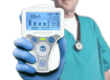
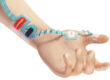
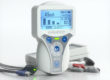
The Stimpod NMS 450X is a quantitative neuromuscular monitor that uses a 3D acceleromyography (AMG) transducer which is effective in detecting the full force of muscle contraction. It minimizes the risk of residual neuromuscular blockade and associated adverse respiratory events.7 As discussed below, this leads to a decrease in the average length of stay in the PACU and substantial cost savings for the hospital.
Reduction in the PACU Length of Stay as a Cost-reducing Measure
The economic structure of the PACU determines whether a cost-saving measure such as reducing the PACU length of stay is likely to reduce hospital costs. Hospital costs can be divided into fixed and variable components. Fixed costs are one-time costs that do not change in relation to the number of surgical cases. These include capital expenditures, such as gurneys, monitors, and the physical plant of the PACU. On the other hand, variable costs are directly related to the number of surgical cases, and include X-ray films, pharmaceuticals, dressings, and laundry.
The only real way of reducing PACU costs is to increase the productivity of the PACU and the staff
It is important to bear in mind that reducing the PACU length of stay will only affect variable costs. Small reductions in the length of time that patients stay in a PACU are unlikely to impact fixed costs at ambulatory surgery centers, which include the labor costs of staffing the PACU with full-time nurses.8 This means that reducing the length of stay of a patient in the PACU by one minute is not equivalent to saving one minute of PACU costs. Therefore, the only real way of reducing PACU costs is increasing the productivity of the PACU and the staff working in it.
Reduction in the Peak Number of Patients Improves Productivity and Reduces Costs
A reduction in the peak number of patients in the PACU is the most effective way to increase the productivity of the PACU and its staff. One way of doing this is to use anesthetic agents that permit a quicker discharge of patients from the PACU. However, if for example the average total time a patient stays in the PACU is 120 minutes, then for a modern anesthetic drug to reduce the peak number of PACU patients by 25%, the drug would have to reduce the mean time to discharge from a total of 120 minutes to just 34 minutes. Such a drastic change is unrealistic and therefore this method is limited in its effectiveness to achieve a substantial increase in PACU productivity.8
Optimization of the time of arrival of patients into the PACU is the single most important measure
For a PACU with salaried or full-time hourly employees, optimization of the time of arrival of patients into the PACU is the single most important measure that can reduce the peak number of patients in the PACU and decrease the peak requirements of nursing staff. This increases PACU productivity and results in PACU cost savings.8 According to a study conducted by Butterly et al., the mean length of stay in the PACU for patients with PORC was found to be 323 minutes whereas the length of stay for patients without PORC was 243 minutes.3 This shows that using the Stimpod NMT monitor for performing objective monitoring and avoiding residual neuromuscular blockade can save up to 80 minutes of the PACU time per patient. The Stimpod thus makes possible the “unrealistic” change that results in a significant reduction in peak patient numbers in the PACU.
Decrease in Operating Room Holding Time Results in Cost Reduction
Postoperative residual curarization results in delayed discharge of the patient from the PACU. If the PACU gets filled up with patients, the next patient has to wait before leaving the operating room resulting in operating room holds. The operating room/PACU system becomes congested. This has debilitating financial fallout as it increases the operating room costs. For instance, if all the operating rooms are filled up with patients waiting for PACU beds, some surgical cases may be delayed or cancelled. Also, in some situations, incentive salaries may have to be paid to the nurses and anesthetists for the extra time that they monitor patients in the operating rooms.3,9,10
The Stimpod quantitative NMT monitor provides an excellent solution to this problem—it minimizes the incidence of PORC and with it PORC-induced delay in PACU discharge. The increased availability of beds in the PACU allows for a quicker release of patients from the operating room. This cuts down operating room costs.
Stimpod NMS 450X—The Ultimate Cost-Saving Option

The Stimpod NMS450X Neuromuscular Monitor reduces the incidence of residual paralysis in 97% of patients
The Stimpod NMS 450X is a fully-automated neuromuscular monitor that supports Train-of-Four (TOF), Double Burst (DB), Post-Tetanic Count (PTC), Tetanus and Twitch Stimulation modes to perform accurate, real-time neuromuscular monitoring. It uses OneTouch NMTTM technology that allows an entire case to be monitored automatically —starting from electrode placement verification to extubation—with the press of a single button. The Stimpod begins TOF monitoring and moves to PTC when a deep block is achieved. It detects the depth of neuromuscular blockade throughout the procedure and automatically reinitiates TOF monitoring when the patient begins the reversal process. The monitoring continues until the patient is more than 90% recovered.
The Stimpod NMS 450X is an all-in-one solution for quantitative NMT monitoring that can
- minimize the incidence of PORC
- reduce the length of stay in the PACU
- increase the PACU productivity by decreasing the peak number of patients
- decrease the operating room hold time
In short, it’s the perfect cost-saving measure for any PACU.
References
- Naguib M, Brull SJ, Johnson KB. Conceptual and technical insights into the basis of neuromuscular monitoring. Anaesthesia 2017; 72: 16–37.
- Boon M, Martini C, Dahan A. Recent advances in neuromuscular block during anesthesia. F1000Res. 2018;7:167. Published 2018 Feb 9. doi:10.12688/f1000research.13169.1
- Butterly A, Bittner EA, George E, Sandberg WS, Eikermann M, Schmidt U. Postoperative residual curarization from intermediate-acting neuromuscular blocking agents delays recovery room discharge. Br J Anaesth 2010; 105: 304–9.
- Duţu M, Ivaşcu R, Tudorache O, et al. Neuromuscular monitoring: an update. Rom J Anaesth Intensive Care. 2018;25(1):55–60. doi:10.21454/rjaic.7518.251.nrm
- Abdulatif M. Neuromuscular transmission monitoring: Beyond the electric shocks and the shaking hands. Saudi J Anaesth. 2013;7(2):115–117. doi:10.4103/1658-354X.114045
- Naguib M, Brull SJ, Kopman AF, et al. Consensus statement on perioperative use of neuromuscular monitoring. Anesth Analg 2018; 127: 71–80.
- Murphy GS, Szokol JW, Marymont JH, Greenberg SB, Avram MJ, Vender JS, Nisman M. Intraoperative acceleromyographic monitoring reduces the risk of residual neuromuscular blockade and adverse respiratory events in the postanesthesia care unit. Anesthesiology 2008;109:389–98.
- Macario A., D. Glenn and F. Dexter, 1999, What can the postanesthesia care unit manager do to decrease costs in the postanesthesia care unit?, J Perianesth, vol 14, pp. 248-93.
- McLaren JM, Reynolds JA, Cox MM, et al. Decreasing the length of stay in phase I postanesthesia care unit: an evidence-based approach. J Perianesth Nurs. 2015;30:116-123.
- Cammu G. Sugammadex: Appropriate Use in the Context of Budgetary Constraints. Curr Anesthesiol Rep. 2018;8(2):178–185. doi:10.1007/s40140-018-0265-6
Contributors
Roche Janse van Rensburg, Maruschka van der Bank, Lourie Höll
Enquiries
Maruschka van der Bank
Product Specialist
maruschka@xavant.com